Pages

Thursday, October 31, 2019

The Greenhouse Effect

✧༺♥༻∞The Greenhouse Effect experiment∞༺♥༻✧


AIM: To Look At Climate Change And The Greenhouse Effect.


Materials:

1. 1 x plastic bottle

2.1 x Teaspoon Baking Soda and Citric Acid
3. 1 x heat lamp
4 1 x Thermometer
5. 100ml of water
6. 1 x rubber bung


Procedure:

1. . Collect 2 bottles, 2 lamps and 2 thermometers from the teacher.
2. Set up bottles and lamps beside a PowerPoint on a flat surface.
3. Pour 100ml water and baking soda.
4. Start to record your findings taken from bottle thermometer. These must be every 5 minutes.

Findings: 

Minutes
Bottle 1: Water 
Bottle 2: CO2 Gas
02121
52518
102722
153125
203425
253428
303630
35DNFDNF
40

45

50


The Water Cycle

This week for Climate Chaos we had to cut out 10 hexagons and explain how each of them went together.

Water Cycle is connected to Transpiration because transpiration is a step of the Water Cycle.

Transpiration and Water Vapour are connected because they are all the action of water vapour going up.

Water Vapour and Evaporation are connected together because they are from water (Oceans, Lakes, Rivers, Ponds) and the watering plants.

Water Vapour and Condensation are connected by when the water vapour rises it forms together to make clouds which is also part of the water cycle.

Evaporation and Condensation are connected because (evaporation) the water evaporates and rises and it clumps together to make clouds (condensation).

Condensation and Hurricanes are connected because they both form.

Hurricanes and Climate Change is connected because Hurricanes can change the climate and the surface of the Earth which can lead to disrupting weather patterns.

Water Vapour and Precipitation are connected because water vapour goes up into the clouds


Thursday, October 17, 2019

Wind Power

Definitions:

  1. Anemometer:
  2. Beaufort wind scale:

Anemometer

MATERIALS

  1. Skewers  
  2. Vivid  
  3. Tape  
  4. Pencil
  5. Pin  
  6. Plastic lid thing

STEPS

  1. Gather all the materials.
  2. Tape the plastic lids to each side of the skewers.
  3. Tape the skewers together.
  4. Then, place the skewers onto the eraser.
  5.  Put the pin through the skewers and eraser.

Group Investigation.

Groups size: 5 
Roles:

  • Timekeeper ( watch)
  • Counter
  • Recorder ( Chromebook or refill )
  • Anemometer Manager ( Anemometer)
  • Wind Manager

Instructions:
  • Go to the measuring place and set up your wind gauge.
  • Make sure everyone in your group is ready to start their roles.
  • Record how many times it spins and record it in the table below.
  • Count the number of spins in 15 seconds.
  • Record it on your chart.

FINDINGS


Place name on school grounds                                    Number of Spins in 15 seconds
1.Field0
2.Old J Block site0
3.Grass hill in quad0
4.Tennis Court gate0

CONCLUSION:

I think that there was no wind on the field because most of the people in our group were crowding around the wind gauge.

I think there was no wind at the olf j block site because there was a building right next to it making it so there was less wind.

I think that there was no wind on the grass hill because it was surrounded by buildings with not a lot of gaps, even though it was higher up, I think the buildings were blocking some of the wind, as well as some of the people in our group crowding it.

I think that there were trees around it as well as people crowding it and a fence.

Thursday, September 26, 2019

My Investigation on Climate Change

ACIDIFICATION

DEFINITION:

When there are too many chemicals and carbons in the air which turns the water acidic.

What is happening to the oceans?

  • The chemicals and carbon are making the water acidic. 
  • It's making the ph levels in the water to high and turning it into a weak acid.

What does this do to shellfish?

  • It makes it more difficult for them to grow their shells.
  • Their shells become thinner and grow slower, they eventually die.

HOW DOES CLIMATE CHANGE CONTRIBUTE TO THE ACIDIFICATION OF OUR OCEANS?

The carbon in the air dissolves into the surface fo the waters. Then the remaining carbon dioxide gets into the water cycle because of the condensation and then goes into the clouds, it then starts to rain and the water with the carbon turns into acid water and then that water ends up in the waters. 

2 Images;

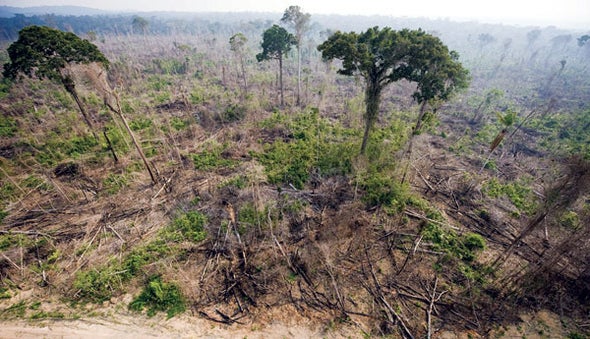
DEFINITION: When large amounts of trees are being cut down fast and they are not being replaced

What are trees used for?
Trees are used for making houses, making stationery, books, firewood, paper, etc.

HOW DOES DEFORESTATION AFFECT THE CLIMATE?

Deforestation affects the climate by messing up the water cycle. It messes the water cycle because the rain doesn't get absorbed and it just sits on the ground causing the areas to turn to swamps and because trees aren't absorbing the water there are fewer clouds so less rain which means the land isn't getting the water it needs. Humans breathe in oxygen and release's carbon dioxide, the trees do the opposite, and that's called photosynthesis. If there are fewer trees there is less oxygen and more carbon dioxide that can be absorbed.

2 Images;
Image result for deforestationImage result for deforestation

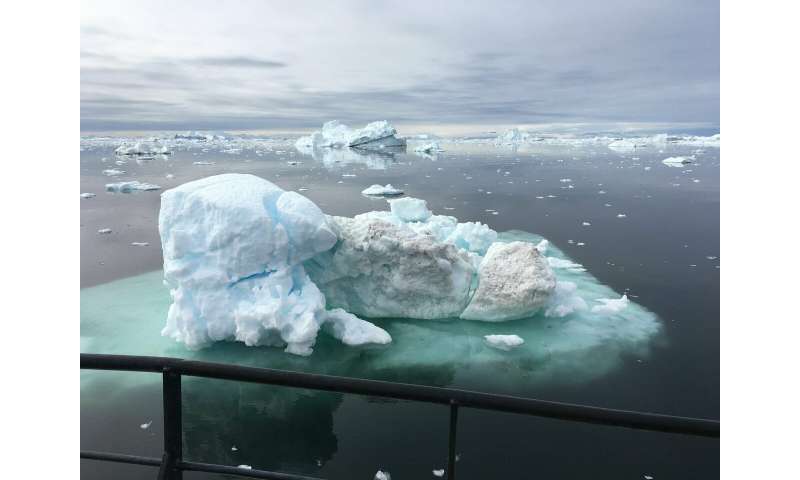
ICECAP MELT

DEFINITION: The Icecaps melting.

If all the ice melted what would happen?
If all the ice melted the sea levels would rise causing around 2 billion people to have to move. All the water would become less salty and it would turn into freshwater seeing as 70% of the freshwater on earth is in the ice in Antartica. All the saltwater animals and coral would die due to them being used to saltwater not freshwater.

HOW DOES ICECAP MELT AFFECT CLIMATE CHANGE?

It would affect climate change by the water levels rising meaning there is less land and people would have to rebuild meaning fewer trees, less oxygen and less sea life. 


2 Images;

Image result for Ice Cap melting

Image result for Ice Cap melting


WATER VAPOUR

DEFINITION:

HOW DOES  WATER VAPOUR AND EVAPORATION CONTRIBUTE TO CLIMATE CHANGE? 


2 Images;


Thursday, September 12, 2019

‧͙⁺˚*・༓☾Solar Energy☽༓・*˚⁺‧͙

  • «────── « ⋅ʚ♡ɞ⋅ » ──────»
  • Aim: To learn about how solar energy is used.

Hypothesis:

I think that the colour black would attract the heat the most. 

Materials:

  1.  Solar Heater
  2.  Thermometer
  3.  Tinfoil
  4.  White Cup
  5.  Clear Cup
  6. White Paper
  7. Black Plastic
  8. Water

Steps

  1.   Gather your materials.
  2. Set up your lamp.
  3.  Cover one of your cups with tinfoil.
  4.  Place the cup with tinfoil on a sheet of tinfoil.
  5.  Get your clear cup and put black plastic over the sides.
  6.   Place cup with black plastic on a sheet of black plastic.
  7. Get a white cup and place it on a sheet of white paper.
  8. Put the cups in a line close together.
  9. Place light in front of the cups.
  10. Every 15 minutes use your thermometer to record the data of all three of the cups.

Findings:


Time 
Cup 1
White
Cup 2
Black
Cup 3
Tinfoil
0
161616
15
192120
30
202220
45
202421
«─────────────────────────────────────────────────────────
«────── « ⋅ʚ♡ɞ⋅ » ──────»

Activity:


In pairs rate the livability of coal vs solar energy.

Comparing Coal energy with Solar energy ( Rate; 1 = poor to 10 = great)

Factor
Solar
Coal
Livability
10
4
Sustainability
10
2
Accessibility
10
3
Cost
9
5
Your choice...
10
2
Conclusion:

1. Solar power is more sustainable than coal is.
2. Sun, wind & water are all renewable energy.
3. The colour black attracts sun & heat.
«──────────────────────────────────────────────────────────»

Monday, September 9, 2019

Ella West

Today Ella West came to our school to visit the year 7 & 8's. She came to talk to us about her book Night Vision and how she wrote it. She also talked about her other books, but mostly about her book called Rain Fall.

She talked about the genetic disorder called XP, and how the main character had XP. She talked about how she was going to base Night Vision in Christchurch she was writing her book around the time of the earthquake, she thought that placing it in Christchurch so she discided to base it in Ashburton instead. She talked about how she needed something big to happen so she thought about the girl coming across a murder in the forest. She said that she needed to come up with how the murder happened. She had to take into account that it was at dark, in a forest, and the main character wasn't social. So she came up with that the murderer was disposing of a dead body with fire.

She also talked about one of her other books, Rain Fall. She talked about how it was based in Westport, she said that the main characters dad works as a train driving taking the coal from the mines. But everyone that words with or at the mines are at risk of losing their jobs because of the coal mine shutting down.

She talked about how she writes her books, and what she does to get them finished. She talked about writing 1,000 words a day so it would take her 50 days to write one book. She also answered our questions about how to write a book and getting it published. She said that she writes her books in New Zealand but is considered an Australian author so she could never get on New Zealand's top to authors list.
Image result for Night Vision Ella WestImage result for Rain Fall Ella West

Monday, September 2, 2019

Issues Of Climate Change

Aim: To learn about the different activities that contribute to climate change.


  • Industry- Factories make clothes, cars, electronics, and processed foods that create pollution. When the factories are running it creates a lot of gas that gets released into the atmosphere. 
  • Transport- Most cars need gas or diesel to make them work. Gas and diesel come from oil, which is a fossil fuel.
  • Waste- Landfills are covering more healthy land, and when it breaks down it makes greenhouse gasses.
  • Cows- Cows create a greenhouse gas called methane when they burp and fart.
  • Food- The food creates a lot of pollution, by having to transport it by ships, planes, trains and trucks.
  • Electricity- Electricity is a form of energy used to power almost everything in our homes. Electricity can come from renewable resources,  but it can come from non-renewable resources.